
Small details can set the tone of a page.
Here, Kean Soo melds the speech balloons into the gutters. A subtle but distinct use of the convention, one I’ve never seen before.
From: Flight, Volume Two
By: Kean Soo
An online commonplace book
Small details can set the tone of a page.
Here, Kean Soo melds the speech balloons into the gutters. A subtle but distinct use of the convention, one I’ve never seen before.
From: Flight, Volume Two
By: Kean Soo

“Roughs” from Jeff Smith’s Bone. Probably the most polished roughs in history.
As a kid, catching a glimpse of a cartoonist’s rough pages provided endless inspiration and encouragement.
My mind melted when I discovered perfect panels didn’t immediately flow from the brushes of master cartoonists.
From: The Art of Bone
By: Jeff Smith
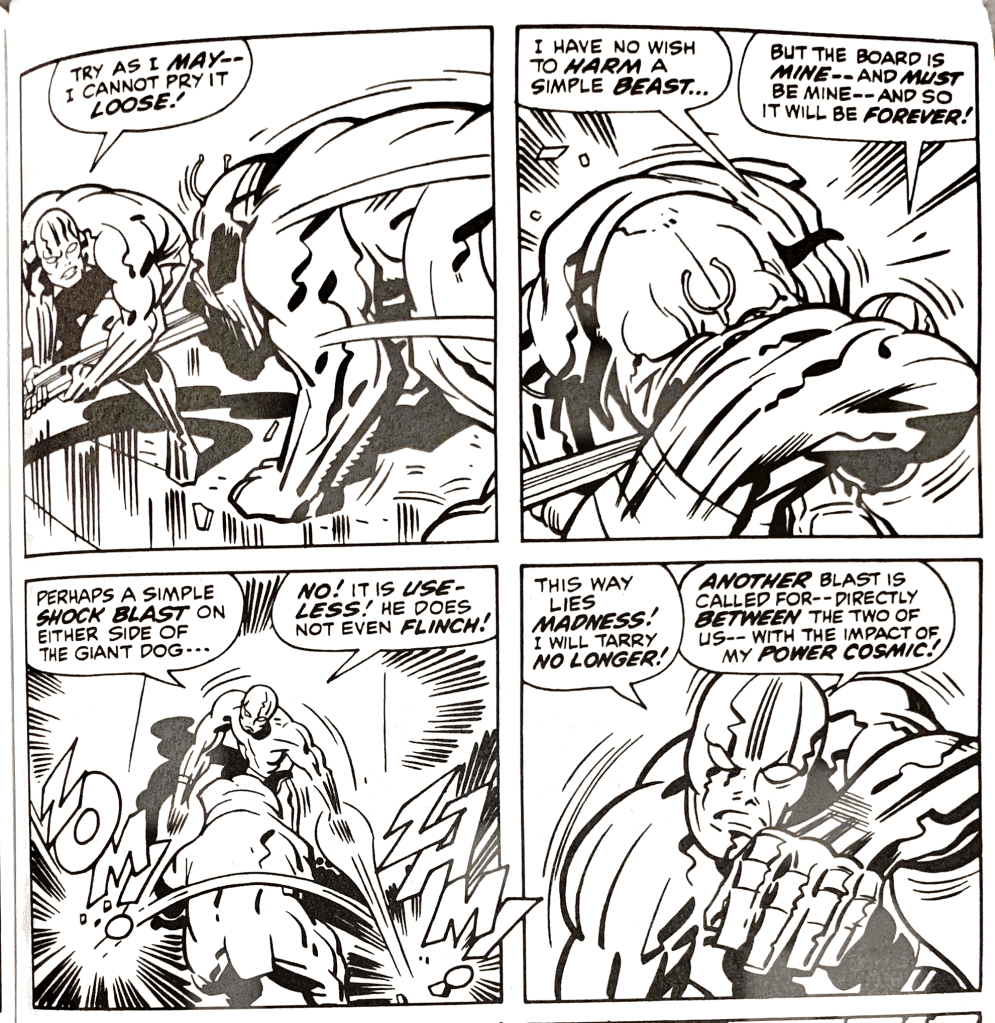
Jack Kirby takes over one issue for John Buscema, and he immediately has Silver Surfer fighting a giant dog.
Timeless Marvel Universe maelstroms that.
From: Essential Silver Surfer, Vol. 1 (Marvel Essentials) (v. 1)
By: Stan Lee, Jack Kirby

Could this strip be inspired from Schulz’s childhood? His father did own a barbershop in Minnesota.
Or taken from his own weekly visits to the barber?
The line Yes, sir, “It pays to look well” is subtle but real. I’ve never had my hair cut during the 1950’s, but that sounds like true old timey barber-speak to me.
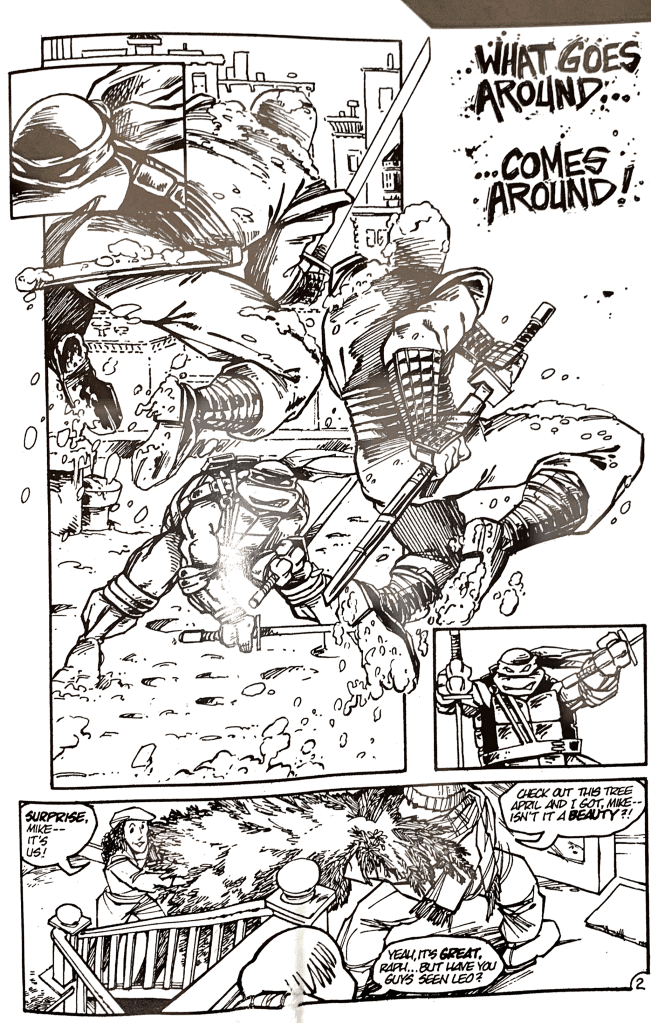
Overrated or underrated – independently published black and white comics?
UNDERRATED.
From: Teenage Mutant Ninja Turtles – Color Classics: Micro Series – Leonardo
By: Kevin Eastman, Peter Laird
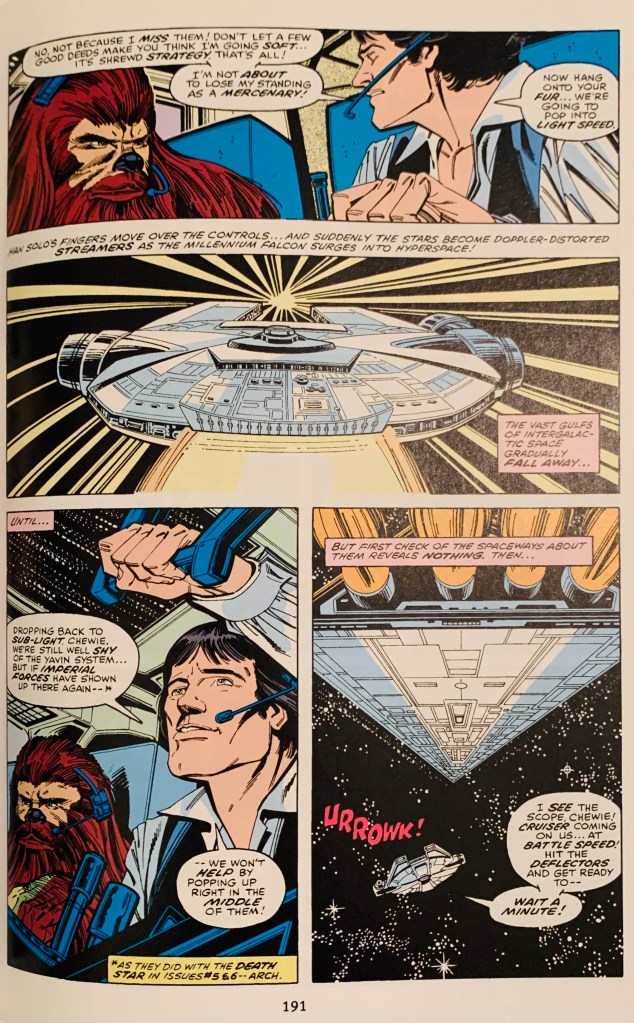
Long before Disney owned Marvel Comics and Star Wars, Marvel Comics Group held the publishing rights to Star Wars comics.
Then shit got weird – for Han Solo in particular.
In this expanded universe Han meets a space rabbit named Jaxxon, wields a light sabre, teams up with a man dressed up in a Chewbacca Halloween costume, and rescues a bald librarian Jedi wannabe named Don-Wan from an intergalactic dinosaur.
Like we said. Shit got weird.
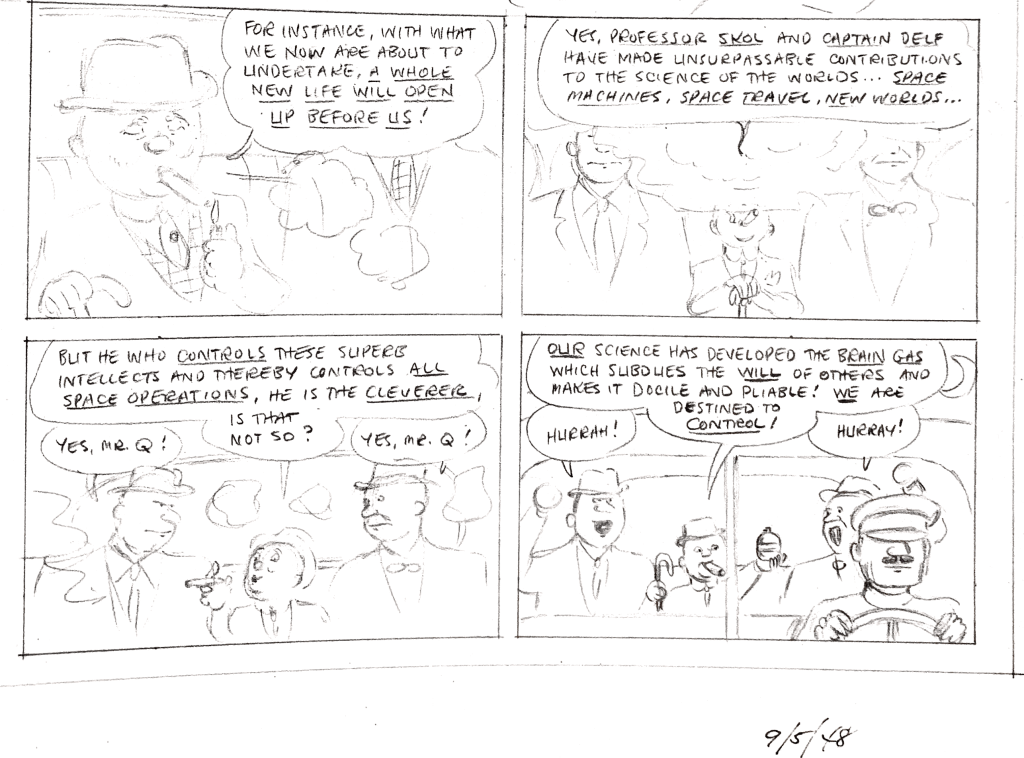
A Four Panel Friday first – layouts instead of completed work. This from an unpublished Spirit story titled: The Cigar.
Important note – Klaus Nordling drew these layouts, not Will Eisner.
Good example of solid panel framing here. Nordling goes from a relative close up of Mr. Q, to framing him between the two henchman. Sweet stache’ on the driver too.
From: Will Eisner: Champion of the Graphic Novel
By: Paul Levitz
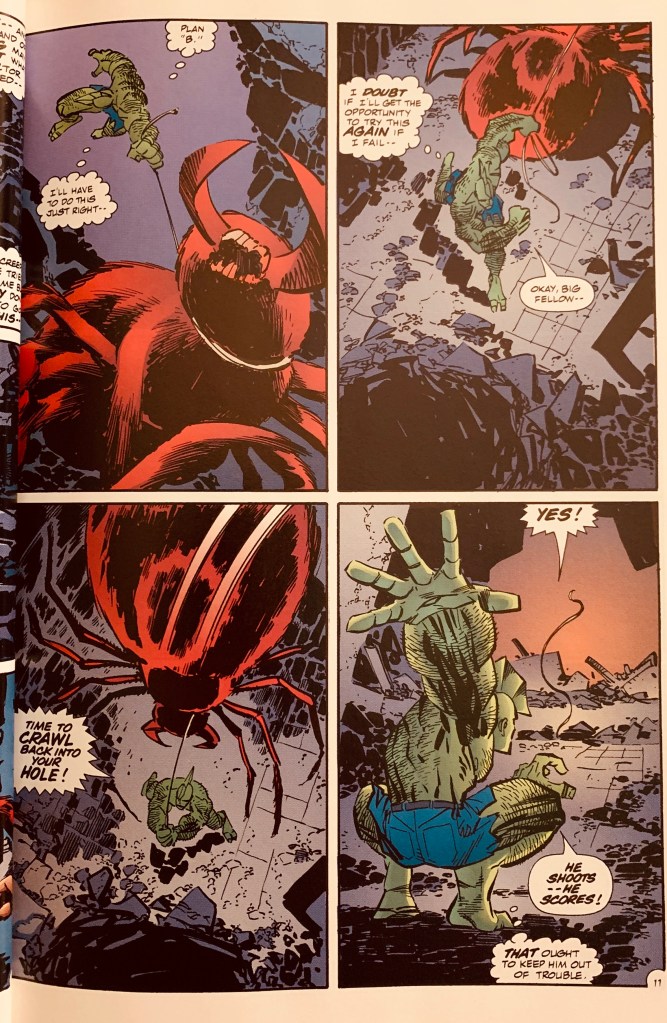
It’s wild.
Savage Dragon was an idea from Erik Larsen’s youth that grew with him into adulthood.
Larsen’s Dragon cracked apart the general superhero story in two ways. (I’m sure there’s more than 2, but for now…)
Savage Dragon is a police officer. The typical super hero trope is a masked gymnast turned vigilante.
Chicago is Dragon’s home. Chicago isn’t as hipster cool as say, Des Moines, Iowa. But it also isn’t New York City, Metropolis, Gotham, Queens or any other NY alias that every other superhero pays crazy rent to live in.
From: This Savage World (Savage Dragon, Vol. 15)
By Eric Larsen
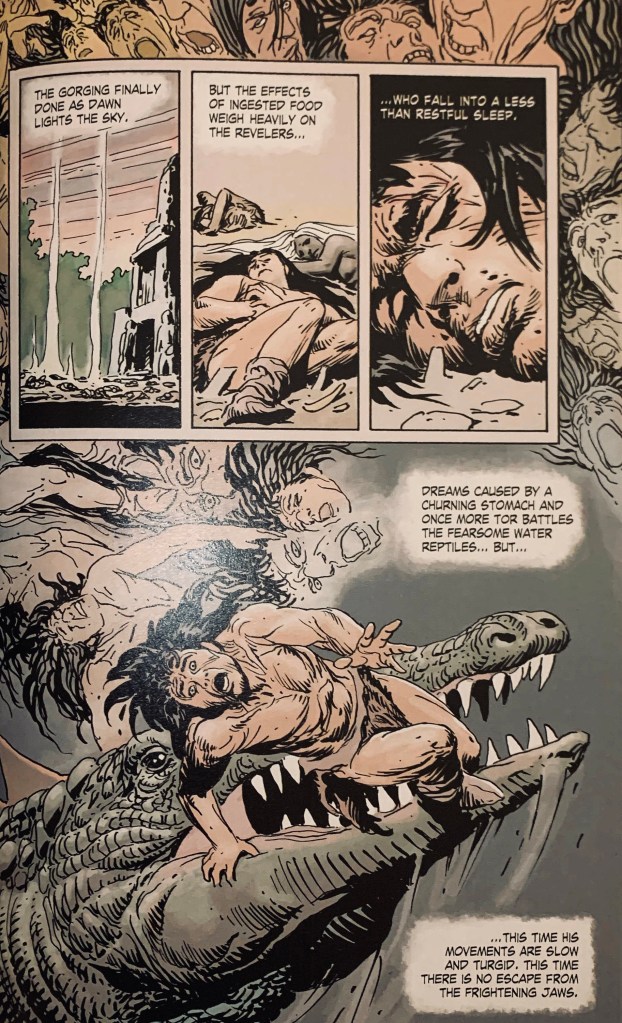
The late Joe Kubert was one of the finest comic book artists of his generation. He was also an underrated paleo-artist.
TOR – A Prehistoric Odyssey unleashes Joe’s paleo-chops. The panels are filled to the brim with not only Dinosaurs, but Sabre-tooth tigers, giant squids, prehistoric alligators, and yeti as well.
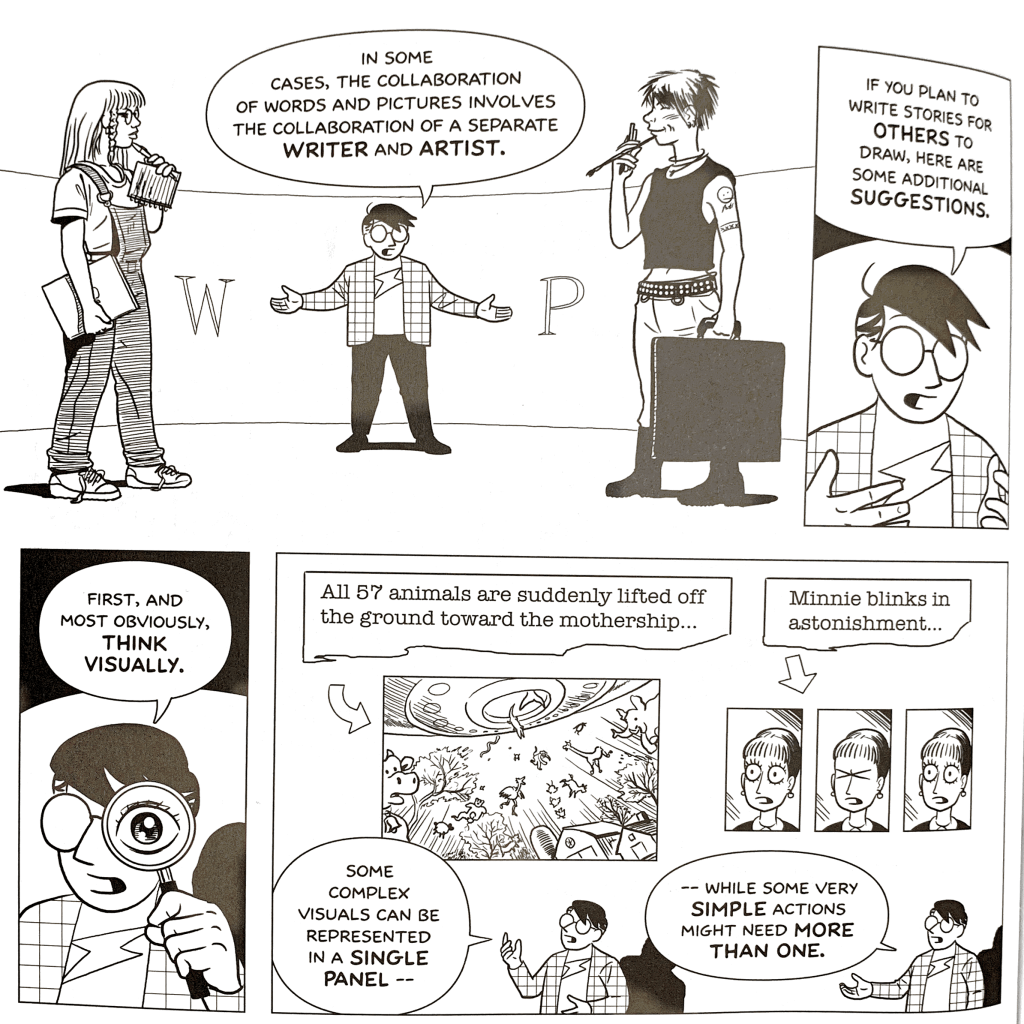
There’s plenty of how-to guides for making comics out there. Still, I can’t think of one as comprehensive as Scott McCloud‘s Making Comics.
Though first published in 2006, Making Comics: Storytelling Secrets of Comics, Manga, and Graphic Novels holds up. Even chapter 7, The Comics Professional, still shares sage advice to aspiring comic writers and artists alike.
 Floodlights and Goalposts