“When you’re a kid, you always want the window seat on the plane. Then, you get older, your heart dies, and you opt for the convenience of the aisle seat.” – Roman Mars
I’ll never look at the window seat the same again.
Take Samuel Johnson’s advice. Resolve, work, fail and resolve again. We should do this not just for ambition, for ‘hope of a better fortune’, but because ‘the time comes at last, in which life has no more to promise’ and all we can do then is remember our lives; and ‘virtue will be ll that we can recollect with pleasure’.
– Henry Oliver
It’s Monday.
Resolve. Work. Fail. Resolve again.
The Samuel Johnson chapter continues to inspires.
Oliver, Henry. Second Act: What Late Bloomers Can Tell You About Success and Reinventing Your Life. United Kingdom, John Murray Press, 2024.
He once picked up a destitute prostitute in the street and carried her on his back to his house where she stayed for some weeks to recover her health. He loved few things better than a tavern. ‘It is wonderful, Sir, what is to be found in London,’ he told Boswell, ‘the most literary conversation that I have ever enjoyed, was at the table of Jack Ellis, a money scrivener behind the Royal Exchange.’ ‘A great city,’ he believed, was ‘the school for studying life’. It was by studying life, as much as from his scholarly reading, that Johnson became the writer he did.
– Henry Oliver
Henry Oliver’s book is brilliant. Carrying it with me everywhere. Burning through pages.
The Samuel Johnson chapter inspires.
Oliver, Henry. Second Act: What Late Bloomers Can Tell You About Success and Reinventing Your Life. United Kingdom, John Murray Press, 2024.
This subterranean fire has its altar in each man’s breast, for in the coldest day, and on the bleakest hill, the traveller cherishes a warmer fire within the folds of his cloak than is kindled on any hearth. A healthy man, indeed, is the complement of the seasons.
Henry D. Thoreau
Thoreau, Henry D.. Essays: A Fully Annotated Edition. Italy, Yale University Press, 2013.
Good images – clear photos of Rabat that highlight the text.
Surprise – Rabat is a city I’d never heard of. Morocco isn’t the first place people mention they’re traveling to, whether online, or in person. The cleanliness of the city and blood-cupping services offered by barbers are also welcome surprises.
The only relevant artistic talent is the ability to deal with frustration. Most of what I produce is not good enough. It’s too complicated, too simple, or has been done before (by myself or others). This is and always will be frustrating. But I can only survive as an artist if I can constantly brush it off and start over again with childish enthusiasm. That is the most important superpower.
Be reckless. A piece won’t be great unless you risk it being terrible. By that I mean sometimes a drawing starts out nicely, but then I’m so afraid of ruining it that I become hesitant — which inevitably ruins it. That’s why you should…
…Deliberately ruin a drawing! This is liberating (and incredibly difficult) exercise. Make a drawing using your usual tools, then step on the gas and drive it into a wall at full speed. Make it pompously, unapologetically, irrevocably ugly and wrong.
Be less precious about your art. The benefit of this exercise: you remember that if you don’t like it, you can always do another one.
Draw like nobody’s watching. Nobody sees what you’re doing in your studio. You can make 97 bad drawings, and three great ones. As long as you only show the three good ones, people will believe you’re a great artist.
Trust the drawing to have its own life. I start with an idea from my head. By default this is derivative and predictable. When I start putting it on paper, it starts having its own agenda. It is only when I manage to let go of my original intentions, that something interesting begins to happen.
Accept that only a fraction of your work is “great”. (Whatever “great” means)!
Walk away, The come back. Wait a few days before deciding whether a piece is “great” or not. Drawing is hard and requires all your attention. Thinking about the merits of a piece is a waste of energy. You’ll be a much better judge tomorrow.
Don’t count the hours. Art is not efficient. Sometimes a good piece is born in minutes, but even then it’s usually surrounded by days of seemingly fruitless poking. Accept this and you’ll be much happier.
Sitting at my desk is always right. I’ve spent a lot of time thinking how to make good work. There are millions of tips and tricks and manifestos out there. But at the end there’s only one single truth for me: sit down and start drawing.
Really what Christoph is saying here is, loosen up! Get in front of your drawing board daily and draw!
Maxi Gorynski makes the argument that the high literacy from earlier times encouraged ambition
John Donne was not known for his intolerable sexiness but for being such a hellcat meme-minter at the pulpit.
The above, may be the best “on-line” sentence I’ve read.
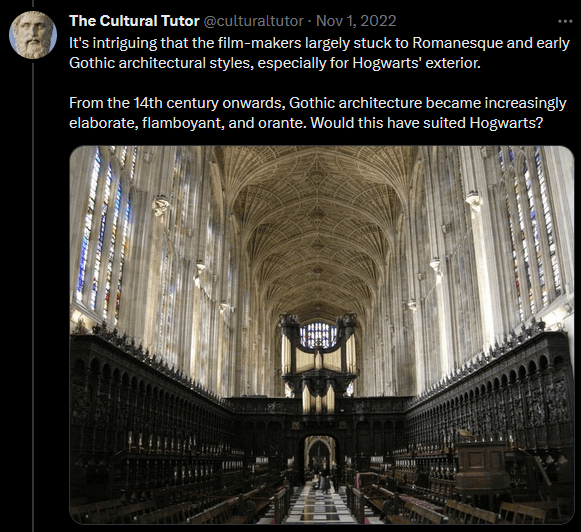
When Hugo wandered off into thick tangential considerations of niche subjects like Gothic architecture, the public didn’t scrunch its nose and go and read something simpler or more focused; instead, they took his lead and developed a passion for Gothic architecture themselves.
Interesting how the French didn’t want to simplify Hugo’s work, but instead further develop their understanding of Gothic architecture.
How was the passion for Gothic Architecture demonstrated at that time?
In summary, what a lack of ambient access to high literacy has to do with ambition: Provides people fewer tools for the processing and composition of complex thought, and fails to keep the mind adequately nourished with new impressions and syntheses that are conducive to high-ambition; and because works of high literacy are themselves conceived in ambition, the lack of opportunity to be regularly immersed in them deprives one of a sense of everyday communion with what is excellent.
I appreciate Maxi Gorynski‘s essay format. Each section presents a clear summary to solidify the point.
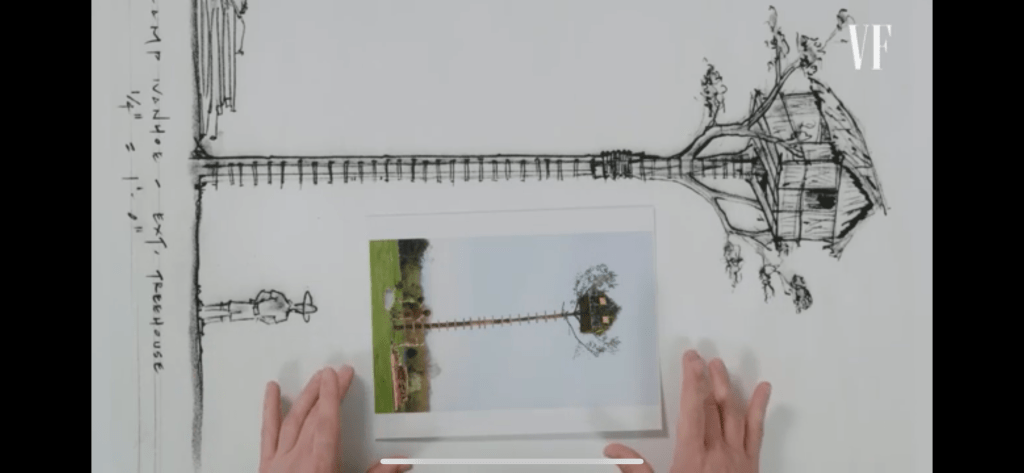
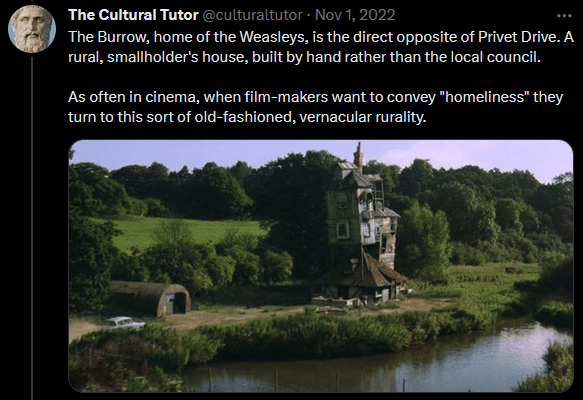
Wes looked at it and said, it’s just not extreme enough. You know, we want a tree house that’s dangerous. That’s the point of this, is that it’s just too much. We wanted to make the whole thing based on a telephone pole that was sunk into the ground. It had to be multiple trees tied together and that’s what you see here is, is one tree tied on to another.
When you’re talking about how we see these sets its really fun to be able to cheat massively, you know and to say well this is the tree house and it’s actually five foot, by four foot, by three foot, when you look at it from the outside. When you look at it from the inside its twenty feet wide and there’s sixteen kids having a conversation in there. There’s no augmentation to this at all. It’s exactly what you see here.
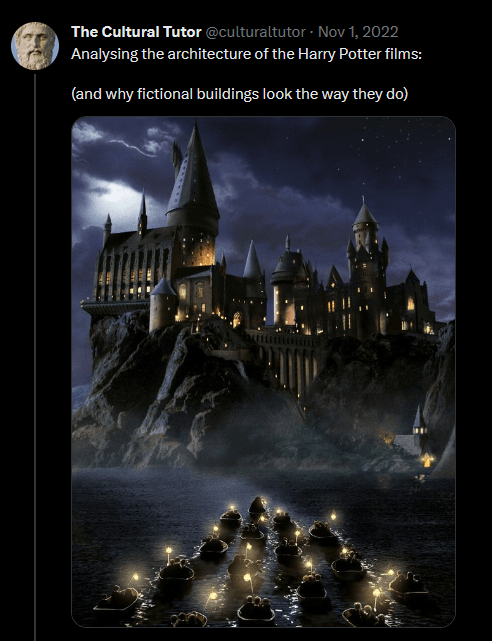
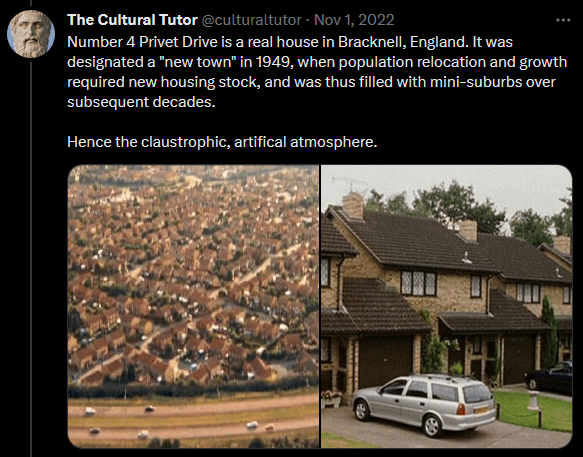
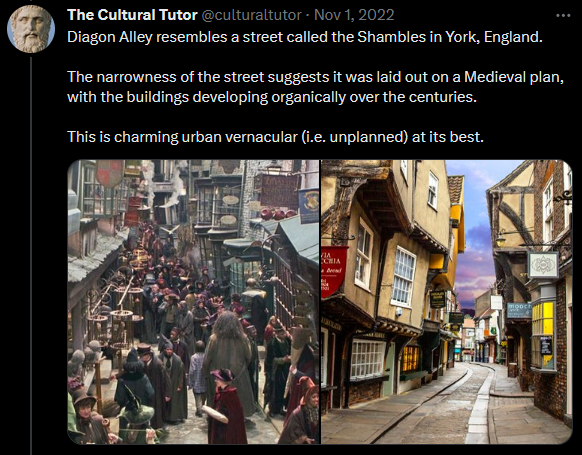
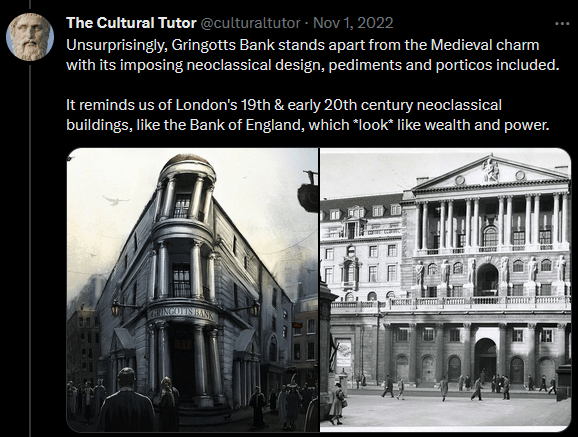
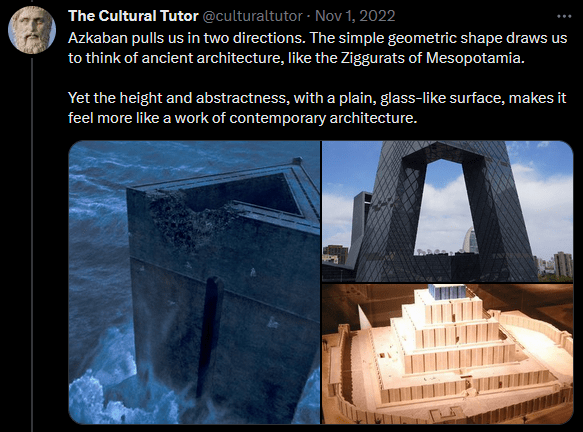
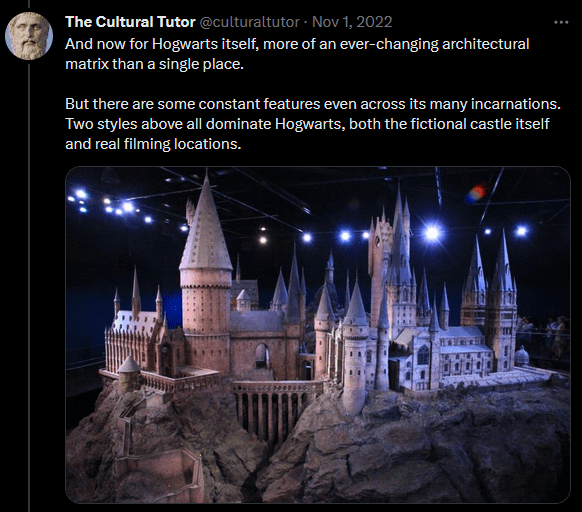
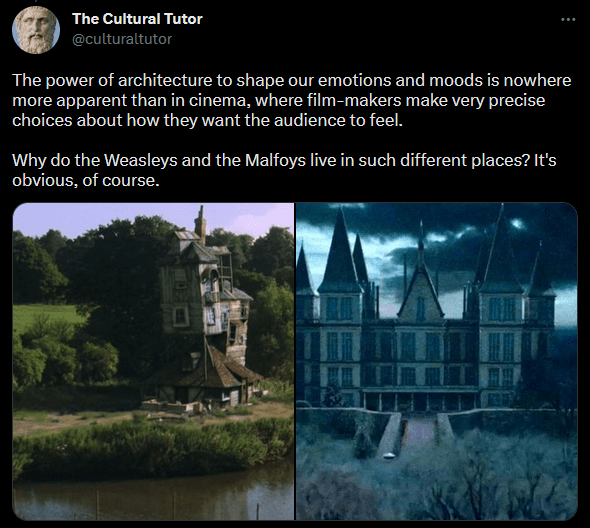
Architecture is powerful. It’s ability to affect our feelings and mood, our sense of place and of identity, is nowhere clearer than in cinema, where film-makers make very specific decisions about how things look.
It controls the audience’s emotion and conveys information.
But that’s the story of architecture in real life, too.
The buildings of our towns and cities affect us – shaping our emotions and conveying information – no less than those in cinema. More so, even, because we actually live and work in and use them every day.
Think of all the great buildings you’ve been near. The Chrysler Building, conveys strength and elegance and progress. And unfortunately a bygone age. Who wouldn’t want to work there?
Or Guadi’s Casa Batlló. His masterpiece. It’s something dreamed up from a Studio Ghibli movie. It’s the House of the Dragon. It’s the House of Bones. It feels like magic when you enter. You can’t leave there without the embers of your imagination burning.
From cinema, think of Tati’s Playtime. The drone grey of the office cubicles Monsieur Hulot observes from the top of the escalator. It’s as if Hulot, in 1967, was peering into the future.




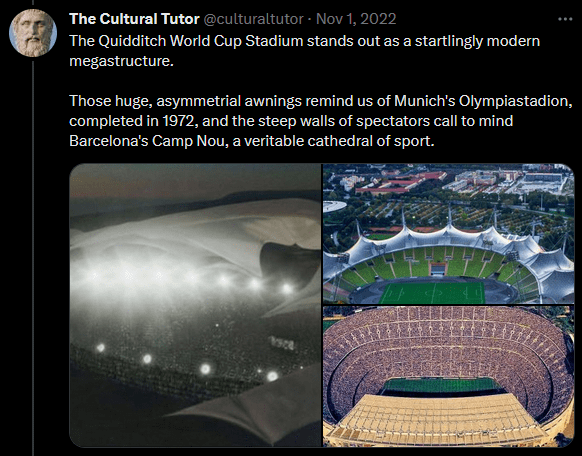





 Floodlights and Goalposts