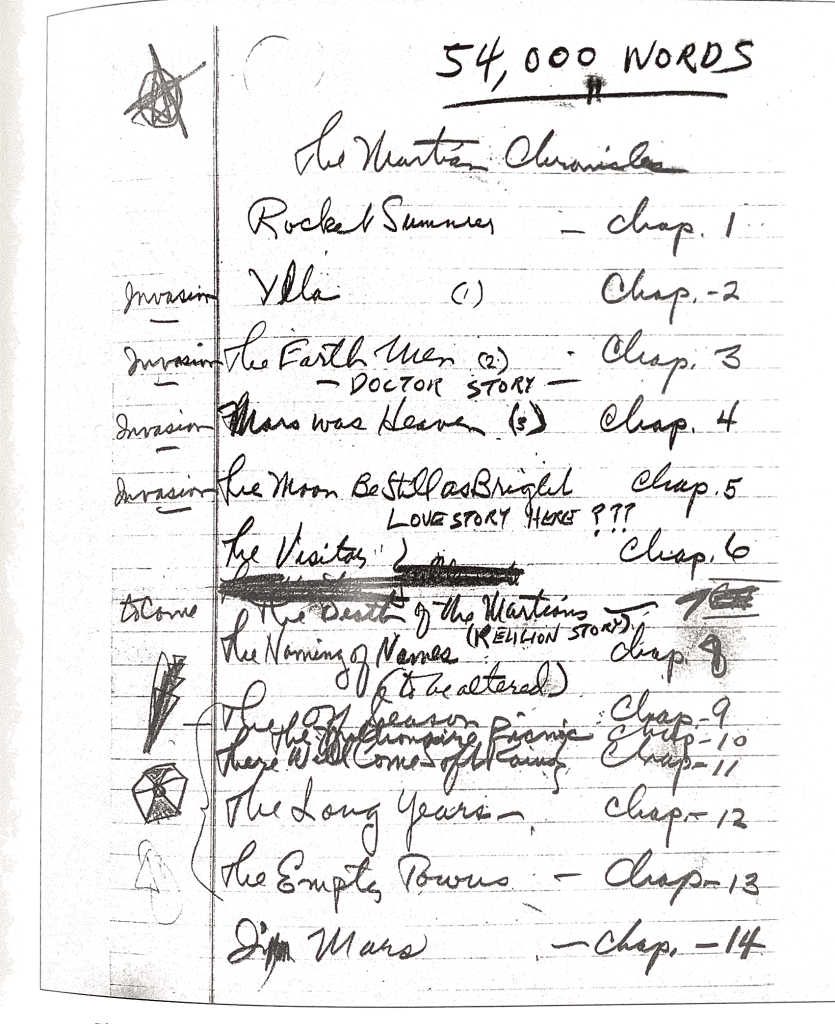
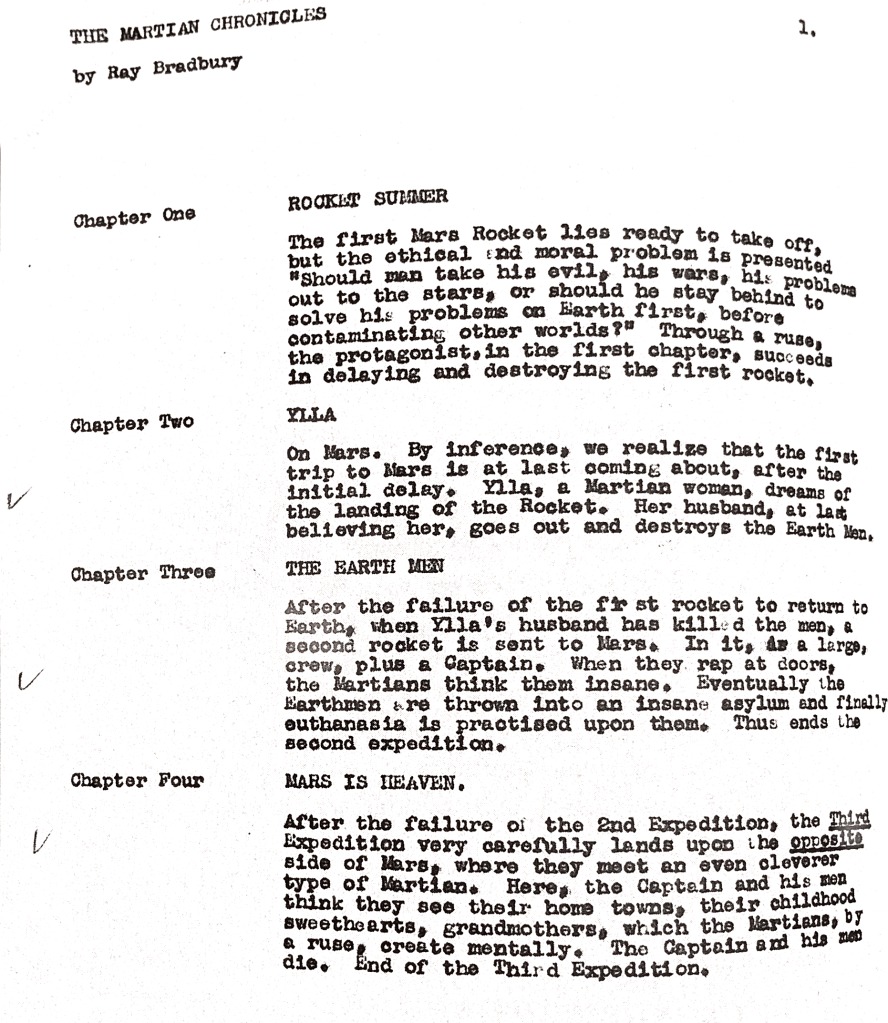
Notes to Bruce Timm from the Broadcast Standards and Practices (BS&P).
How did Batman the Animated Series ever get on the air?
Excerpt from: Batman Animated, by Paul Dini and Chip Kidd.
An online commonplace book

Notes to Bruce Timm from the Broadcast Standards and Practices (BS&P).
How did Batman the Animated Series ever get on the air?
Excerpt from: Batman Animated, by Paul Dini and Chip Kidd.
Great are the plunges and throes and triumphs and falls of democracy,
Great the reformers with their lapses and screams,
Great the daring and venture of sailors on new explorations.
A poem for sleepy eyes.
Who are the reformers?
From: Leaves of Grass 150th Anniversary Edition (Penguin Classics), pg.156
Pogba might naturally be tall, powerful, and rangy, but you can find hundreds more across Europe’s top leagues with those attributes. What marked him apart, even as a kid was his work ethic. “I remember telling the group at training one Monday to juggle the ball 50 times with their right foot, 50 times with their left, and 50 times with their head,” recalled another of his coaches at Roissy, Mamadou Papis Magassa. “Paul couldn’t do it. But he spend the next two days with a football, practicing constantly. He came back Wednesday and did it perfectly.”
8by8 Magazine issue 8, All Eyes on Paul. By Paolo Bandini.
How did Nicki Bandini (then Paolo) scoop this tale of Paul Pogba? Can you picture young Paul in the back garden practicing his juggling?
Even the gifted need to put in the work.
Great is today, and beautiful,
It is good to live in this age….there never was any better.
From: Leaves of Grass 150th Anniversary Edition (Penguin Classics), pg.156
No better way to celebrate the last day of October than with Walt Whitman.
If you want to see the girl next door, go next door.
Joan Crawford
Good sentences, enviable sentences even, can be found in places other than books or articles. In his book How to Write a Sentence: And How to Read One, author and law professor Stanley Fish shares this story:
One nice thing about sentences that display a skill you can only envy is that they can be found anywhere, even when you’re not looking for them. I was driving home listening to NPR and heard a commentator recount a story about the legendary actress Joan Crawford. It seems that she never left the house without being dressed as if she were going to a premiere or a dinner at Sardi’s. An interviewer asked her why. She replied, “If you want to see the girl next door, go next door.”
How to Write a Sentence: And How to Read One, Stanley Fish. Pg 4
Fish breaks it down:
It is the bang-bang swiftness of the short imperative clause-“go next door”- that does the work by taking the commonplace phrase “the girl next door” literally and reminding us that ” next door” is a real place where one should not expect to find glamour (unless of course one is watching Judy Garland singing “The Boy Next Door” in Meet Me in St. Louis).
How to Write a Sentence: And How to Read One, Stanley Fish. Pg 4
I had to add this to my online common place book:
“Remember this, son, if you forget everything else. A poet is a musician who can’t sing. Words have to find a man’s mind before they can touch his heart, and some men’s minds are woeful small targets. Music touches their hearts directly no matter how small or stubborn the mind of the man who listens.”
The Name of the Wind. Patrick Rothfuss. pg 106
How to Read a Book: The Classic Guide to Intelligent Reading. By Mortimer J. Adler and Charles Van Doren.
It’s a book I hesitated to buy. A book on how to read a book? Come on. I got this.
But people far smarter than I recommended it.
Kevin Kelly mentions it on his selections for the Manual for Civilization. Maria Popova has it listed on her Brain Pickings piece – 9 Books on Reading and Writing.
I clicked BUY NOW.
Structurally I thought it would be a step-by-step guide.
Step 1 – Open the book. Step 2 – Don’t use a highlighter. That sort of thing. Instead it’s broken into topics. Essays on how to read specific topics and genres.
Examples include:
How to Read History
How to Read Philosophy
And the chapter I started with: Suggestions for Reading Stories, Plays, and Poems
Adler and Van Doren’s argument for reading quickly surprised me.
The first piece of advice we would like to give you for reading a story is this: Read it quickly and with total immersion. Ideally, a story should be read at one sitting, although this is rarely possible for busy people with long novels. Nevertheless, the ideal should be approximated by compressing the reading of a good story into as short a time as feasible. Otherwise you will forget what happened, the unity of the plot will escape you and you will be lost.
How to Read a Book: The Classic Guide to Intelligent Reading. By: Mortimer J. Adler, Charles Van Doren, pgs 212,213
I’m a slow reader. I’m looking to absorb every character in detail. Adler and Van Doren suggest we’ll remember who’s important:
We should not expect to remember every character; many of them are merely background persons, who are there only to set off the actions of the main characters. However, by the time we have finished War and Peace or any big novel, we know who is important, and we do not forget. Pierre, Andrew, Natasha, Princess Mary, Nicholas- the names are likely to come immediately to memory, although it may have been years since we read Tolstoy’s book.
How to Read a Book: The Classic Guide to Intelligent Reading. By: Mortimer J. Adler, Charles Van Doren, pg 213
They argue this is also true for incidents. We should trust the author to flag what’s important:
We also, despite the plethora of incidents, soon learn what is important. Authors generally give a good deal of help in this respect; they do not want the reader to miss what is essential to the unfolding of the plot, so they flag it in various ways. But our point is that you should not be anxious if all is not clear from the beginning. Actually, it should not be clear then. A story is like life itself; in life, we do not expect to understand events as they occur, at least with total clarity, but looking back on them, we do understand. So the reader of a story, looking back on it after he has finished it, understand the relation of events and the order of actions.
How to Read a Book: The Classic Guide to Intelligent Reading. By: Mortimer J. Adler, Charles Van Doren, pg 213
A book can lose your attention because it’s not clear in the beginning. I fumbled through the first chapter of The Amazing Adventures of Kavalier and Clay, not sure what was happening. I kept on though. It turned out to be one of the best books I’ve ever read.
Adler and Van Doren on the importance of finishing a book:
All of this comes down to the same point: you must finish a story in order to be able to say that you have read it well.
How to Read a Book: The Classic Guide to Intelligent Reading. By: Mortimer J. Adler, Charles Van Doren, pg 213
With that, I’m going to give this reading quicker idea a go. Starting with Patrick Rothfuss‘s Name of the Wind.
I’ll report back.
Keep reading.
This one is for all you tactics geeks. A list of the six tactical changes Pep Guardiola made during his first 6 months at Bayern Munich.
Pep’s longtime assistant coach, Domènec Torrent explains:
He’s full of re-invention – in six months here Pep has tried more thing than in four years at Barca.
The list highlights how Pep adapted to the counter-attaching style of the Bundesliga. And how he tailored his possession system for his two dominant wingers – Robben and Ribery
For a coach so steadfast in his principles, Pep is open to adapting to the circumstances presented to him.
1: THE DEFENSIVE LINE
Pep has moved it forward from a starting point of 45 metres in front of the keeper. If Bayern are fully on the attack high up the pitch then he wants the two center-halves to take up positions 56 metres ahead of Neuer – in the opposition half.
2: PLAYING AND MOVING FORWARD FROM THE BACK, IN TOTAL UNISON
The team has got this: it’s a journey they must take together. How they play out from the back is of absolute importance to how things then develop in the attacking phase.
3: ORDER IN THE PLAY
The passing sequences need to balance the team’s positioning. If properly effected, from beginning to end it means their attack will be ordered and if the ball is lost it can be won back quickly, with little wasted effort.
4: SUPERIORITY IN MIDFIELD
This is the essence of Pep’s playing philosophy. He always wants his team to have midfield superiority, whether numerical or positional. Achieving this guarantees his team will dominate the game.
5: FALSE ATTACKING MIDFIELDERS
This is the big tactical innovation within Pep’s first season. Given the powerful wing play of Robben and Ribery and also the need to immediately cut off the counter-attacks of opponents high up the pitch, Pep has decided to position his full-backs almost as old-fashioned inside-forwards, right alongside the other attacking midfielders, high up the pitch.
6: PLAYING WITHOUT A FALSE 9
From being the absolute key figure at Barcelona, the false 9 is now just one more potential tactic for Bayern. It will be used sporadically, depending on the specific needs of a particular match or phase within a game.
Afternoon light ripened the valley
From: Another Life, by Derek Walcott. As read from Teju Cole’s essay Derek Walcott, from his collection of essays – Known and Strange Things.
I read this Derek Walcott line repeatedly. I admit I’d never heard of Walcott before reading Teju Cole’s essay.
With a few words Walcott took me to a mountain range.
I could see the orange and yellows wash across the shrubs. I watched the white and pink light flood over the granite.
I wanted to keep going back there.
Hello everyone,
Here’s a piece of writing I enjoyed today.
From Nick Cave’s blog – The Red Hand Files, Issue #67
A reader asked:
How much time do you spend answering these questions? Thinking of a response? Researching for a factual (where necessary) response? Writing, editing and moulding the response? The fluidity of your responses seem like an almost spontaneous stream of consciousness, but the conciseness, the beauty, the lyricism, the depth of meaning and the way the response pulls together within its own universe belie a great deal of time. How long does it all take?
– BRETT, PORT PIRIE, AUSTRALIA
Nick’s response:
Dear Brett,
Fucking ages.
Love, Nick
Writing takes time. Good writing takes ages.