Outlining is a fundamental of building.
Planning is a fundamental of doing, and outlining is a fundamental of planning.
– dnbt777
Eager to test this methodology out. Read the article in full below:
An online commonplace book
Outlining is a fundamental of building.
Planning is a fundamental of doing, and outlining is a fundamental of planning.
– dnbt777
Eager to test this methodology out. Read the article in full below:
The ability to distinguish relevant from less relevant information is another skill that can only be learned by doing. It is the practice of looking for the gist and distinguishing it from mere supporting details. As we are forced to make this distinction when we read with a pen in our hand and write permanent note after permanent note, it is more than mere practice: it is deliberate practice repeated multiple times a day. Extracting the gist of a text or idea and giving an account in writing is for academics what daily practice on the piano is for pianists: The more often we do it and the more focused we are, the more virtuous we become.
Note-taking is thinking. A method and practice for helping one pay attention to the world.
Plan accordingly.
Ahrens, Sönke. How to Take Smart Notes: One Simple Technique to Boost Writing, Learning and Thinking. Germany, Sönke Ahrens, 2022. pg82
The concept is pretty simple. First, you prepare any work you have and set it out in front of you. Also, plug your laptop in, go to the bathroom, that kind of stuff. You set a 1 hour timer on a kitchen timer or phone. For that hour, you work hard with no interruptions. And I mean no interruptions. You turn your phone off and put it in another room. You can have your computer, but you can’t have it open when your work doesn’t require it, and you can’t even open a tab if it isn’t immediately necessary to your work. No stretch breaks, no bathroom breaks, no food, no talking. I know. Brutal. If an hour of total focus seems like too much, you can always do 1/2, 1/3, or even 1/4 of a Doro. The length of the Doro doesn’t matter. All that matters is that you totally focus for the entire time. Why is this so important? Two reasons.
First of all, totally focusing and not allowing yourself any breaks shatters the thought that many people, myself included have when they procrastinate: “I have a lot of work, and I’m going to get it all done, so I’ll just watch one or two videos first.” The psychological attitude most people have is that they are going to have to get a lot of work done, so they just want a quick break first. It’s important to recognize that this often leads into complete stagnation and hours wasted. You have to set a defined time in which you have to work, and can’t take any breaks.
Secondly, working without any interruption makes you way more efficient – you go into this zone where you forget about everything outside of your work. This sounds strange, but often when I finish a Doro I almost feel sad. This is because instead of constantly waiting for it to be over, you actually lock in and stop thinking about the outside world. When it ends, you’re brought back into reality, which is a bit of a shock, because you were so productive.
– Macabee Callard
If you’re looking for a method to regain your concentration Doro’s are way to begin. Think of them like chin-ups for your focus-muscle. Don’t think about it too much, grab the nearest timer and go.
Macabee also gives another excellent tip for what to do if you finish your Doro session early:
If you finish your work, but you still have time left in the Doro, instead of ending the Doro prematurely find a way to use the extra time. Go over the reading again, check your homework answers, edit your paper for an even better final draft, or even do work that isn’t assigned for the near future, or just make something up! It’s good to complete Doros, because that mentally reinforces them as a unit of time, as opposed to just an incentive to get you working. It feels good to finish them, and also you will be able to put them on your calendar!
Helpful post. Read it in full here.
Most people blog and write online to share what they know. To look smart. It’s understandable. It’s human nature.
But I enjoyed online writer extraordinaire Adaobi‘s approach. Asking the online world questions.
Her question straight out – how does one become a polymath?
– How can I develop an up-to-date taste for what “good” looks like faster?
Adaobi, Adaobi’s Newsletter. Questions: How to be a polymath. January 22, 2023
– How can I reverse engineer great work faster?
– How can I access my subconscious faster?
– How can I ponder on multiple things simultaneously?
– How can I identify top-tier talent in new fields?
– How do I choose which skills to cultivate in a new field?
– How can I develop a better sense of bad ideas?
– How do I avoid dogma?
– How can I ask better questions?
Pair with her excellent post Overlooked Problems
Twitter storms, podcasts,
contradictions burn my ears.
Leave. Think for yourself.
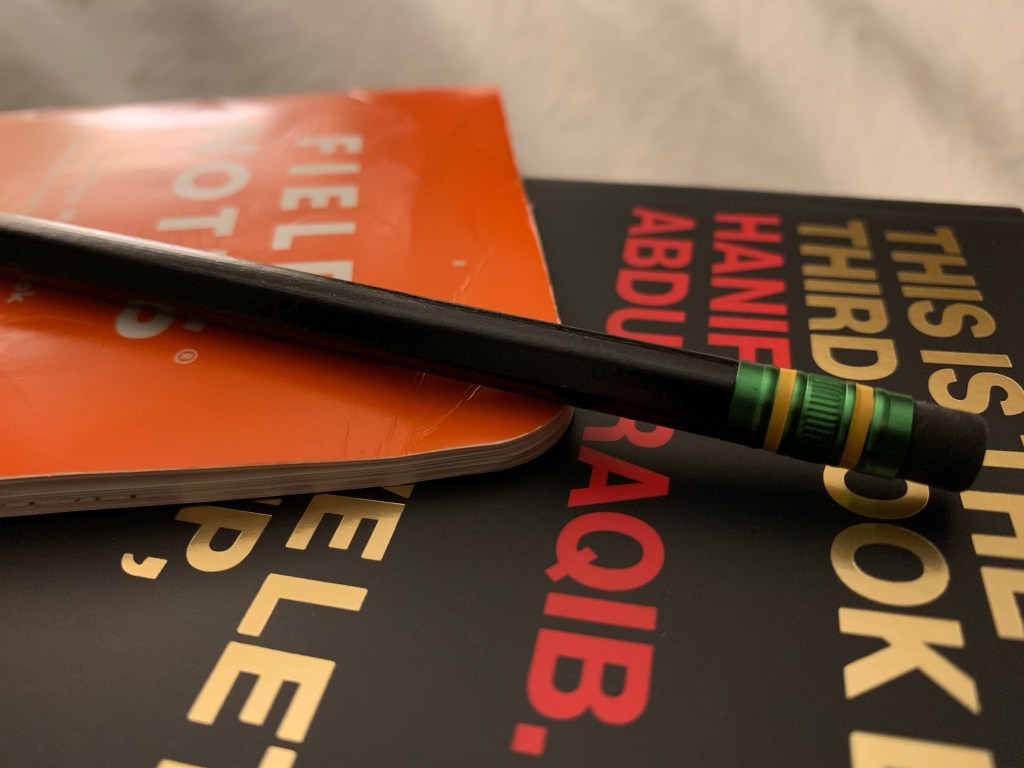
A Field Notes pad will make you brave as Ernest Shackleton.
A Ticonderoga pencil will make you write like Dickens.
Get some.
 Floodlights and Goalposts