“Reason holds the helm, but passions are the gales.”
– John Adams
John Adams was enlightened to the human heart.
McCullough, David. John Adams. United Kingdom, Simon & Schuster, 2001. pg 421
An online commonplace book
“Reason holds the helm, but passions are the gales.”
– John Adams
John Adams was enlightened to the human heart.
McCullough, David. John Adams. United Kingdom, Simon & Schuster, 2001. pg 421
That one had to keep a “good heart,” come what may, was Abigail’s lifelong creed. “A merry heart doeth good like medicine,” she loved to say, quoting Proverbs. “I hate to complain,” she now wrote. “No one is without difficulties, whether in high or low life, and every person knows best where their own shoe pinches.
With all of the Richmond Hill house sick, Abigail Adam’s “good heart” endured.
The most formidable first lady of all time?
McCullough, David. John Adams. United Kingdom, Simon & Schuster, 2001. pg 423
At loose ends once again in Europe, and with no word from Congress, Adams was nonetheless determined to make himself useful. If nothing else, he could write—Adams would always write. Another man might have relaxed and bided his time, just as another man might have waited at El Ferrol for his ship to be repaired, rather than striking out over the mountains of Spain.
Always choose to make yourself useful, regardless of circumstance.
You too, can always write.
McCullough, David. John Adams. United Kingdom, Simon & Schuster, 2001. pg 234
What a large volume of adventures may be grasped within this little span of life by him who interests his heart in everything.
McCullough, David. John Adams. United Kingdom, Simon & Schuster, 2001. pg 287
Thanks to Madame Lafayette, they were seated in a gallery overlooking the choir, “as good a place as any in the church,” thought John Quincy, who in a long description of the spectacle in his diary demonstrated that besides being precociously erudite, he had learned, as his father urged, to observe the world around him and was well started on becoming an accomplished writer. He described the Parliament lined up to the right side of the choir, robed in scarlet and black, the Chambre des Comptes on the left, in robes of black and white; the bishops arriving two by two, “a purple kind of mantle over their shoulders,” the Archbishop of Paris, “a mitre upon his head,” and finally the arrival of the King.
John Quincy Adams heeding his father’s advice to observe the world around him.
Or as Teju Cole begs: observe, observe, observe.
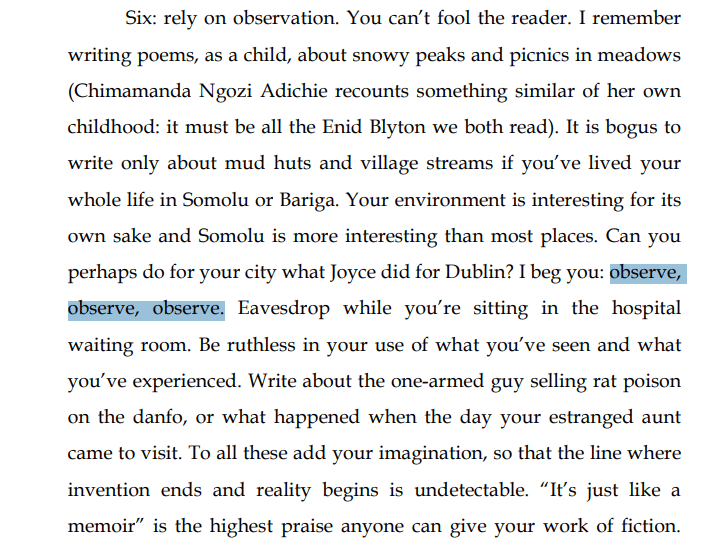
McCullough, David. John Adams. United Kingdom, Simon & Schuster, 2001. pg 327
True genius does what it takes to succeed, which is why Michelangelo, old, tired, irritated at not being able to go home to Florence, went to a building site in Rome every day and talked to people who hated him about hauling stone and carving pillars. As well as everything else, Michelangelo turned out to be a late bloomer in the art of running a construction site. Everyone who loves architecture can still feel glad about that today.
– Henry Oliver
Even Michelangelo took on projects that he wanted to pass on. But when the Pope asks you to become the architect for the St Peter’s basilica “yes” is your only response.
Also, maybe architecture isn’t as glamorous a profession as depicted?
Read the article in it’s entirety here. It will reveal to you new sides of Michelangelo.
Oliver, Henry. “It Is Never Too Late for Greatness.” CapX, July 4, 2024. https://capx.co/it-is-never-too-late-for-greatness/.
Once, for no reason other than intellectual curiosity, Adams rode to Windsor to call on the famous English astronomer Sir William Herschel, whose crowning achievement had been the discovery of the planet Uranus. Greeting Adams affably, Herschel was delighted to talk of his work, and Adams returned to Grosvenor Square elated. Nabby recorded that she had never known her father so gratified by a visit of any kind.
Lonely and isolated in London, John Adams took the opportunity to visit with Sir William Herschel.
Remember that today as you grill your burgers in celebration.
Happy Fourth of July!
McCullough, David. John Adams. United Kingdom, Simon & Schuster, 2001. pg 343
Write early in the morning, cultivate memory, reread core books, take detailed reading notes, work on several projects at once, maintain a thick archive, rotate crops, take a weekly Sabbath, go to bed at the same time, exercise so hard you can’t think during it, talk to different kinds of people including the very young and very old, take words and their histories seriously (i.e., read dictionaries), step outside of the empire of the English language regularly, look for vocabulary from other fields, love the basic, keep your antennae tuned, and seek out contexts of understanding quickly (i.e., use guides, encyclopedias, and Wikipedia without guilt).”
I’d add Claude 3.5 Sonnet and Perplexity.ai to without guilt list.
H/T Austin Kleon
Hanrahan, Brían. “The Anthropoid Condition: An Interview with John Durham Peters.” Los Angeles Review of Books, July 10, 2015. https://lareviewofbooks.org/article/the-anthropoid-condition-an-interview-with-john-durham-peters/.
The ability to distinguish relevant from less relevant information is another skill that can only be learned by doing. It is the practice of looking for the gist and distinguishing it from mere supporting details. As we are forced to make this distinction when we read with a pen in our hand and write permanent note after permanent note, it is more than mere practice: it is deliberate practice repeated multiple times a day. Extracting the gist of a text or idea and giving an account in writing is for academics what daily practice on the piano is for pianists: The more often we do it and the more focused we are, the more virtuous we become.
Note-taking is thinking. A method and practice for helping one pay attention to the world.
Plan accordingly.
Ahrens, Sönke. How to Take Smart Notes: One Simple Technique to Boost Writing, Learning and Thinking. Germany, Sönke Ahrens, 2022. pg82
What would you add to this list? What would you strike out?
Any here you feel are un-reasonable?
Patagonia. “Go Simple, Go Solo, Go Now: The Life of Audrey Sutherland.” Patagonia. Accessed June 2, 2024. https://www.patagonia.com/stories/go-simple-go-solo-go-now-the-life-of-audrey-sutherland/story-17793.html.
 Floodlights and Goalposts