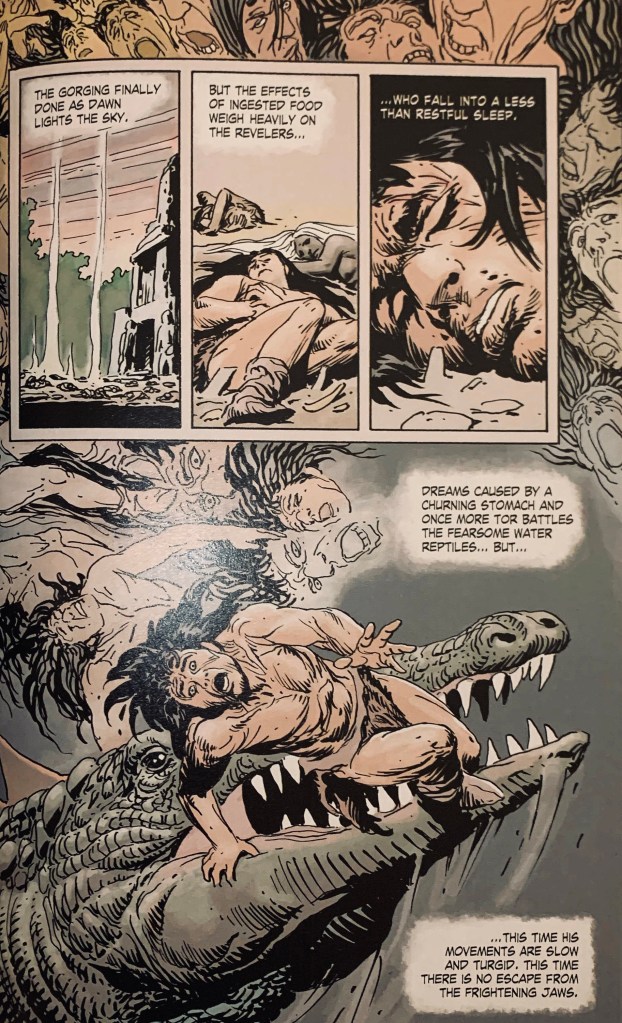
The late Joe Kubert was one of the finest comic book artists of his generation. He was also an underrated paleo-artist.
TOR – A Prehistoric Odyssey unleashes Joe’s paleo-chops. The panels are filled to the brim with not only Dinosaurs, but Sabre-tooth tigers, giant squids, prehistoric alligators, and yeti as well.
Both practices are rapid movements of the pen, marker or pencil, attempting to capture a form quickly.
A tag though is made to be seen. It’s intent is to pay homage to the creator.
Gesture drawing is an exercise. Their intent is to loosen up the artist, and then hit the wastebasket.
It is only action, the gesture, that you are trying to respond to here, not the details of the structure. You must discover – and feel – that the gesture is dynamic, moving, not static. Gesture has no precise edges, no exact shape, no jelled form. The forms are in the act of changing. Gesture is movement in space.
A reminder: Don’t fret. It’s fine to go through reams of paper:
Feel free to use a great deal of paper and do not ever worry about ‘spoiling’ it – that is one of our reasons for using cheap paper. I notice that students working at their best, thinking only of the gesture and not of making pictures, often throw their drawings into the trash-can without even looking at them. A few should be kept and dated as a record of your progress, but the rest may be tossed aside as carelessly as yesterday’s newspaper. Results are best when they come from the right kind of un-self-conscious effort.
Don’t draw with cheap felt-tip pens. The ink in drawings made with felt tip pens will fade in a few years, and all you’ll be left with is a bunch of ghostly images, then nothing at all. And these drawings fade even faster when exposed to sunlight. So wise up and use pens with permanent ink, and try to draw on paper that’s not going to yellow and fall apart. (I learned this the hard way.)
Finish your work! Drawing complete stories is really hard, especially when you’re a kid, but there’s nothing like having a finished story-with beginning, middle, and end-to amuse yourself and your friends. Unfinished work just doesn’t cut it.
Save your stuff! Often, as your drawing and writing skills develop, or you get older and start having other more “mature” interests, your earlier cartoon work starts looking lame and clumsy. The usual urge is to toss it-but resist that urge! I guarantee that later in life you’ll be glad you held on to your cartoons, no matter how stupid they look now.
Don’t let your mom throw your cartoons out! Moms have a tendency to do this. You go off for a weekend visit to Aunt Gladys, or you get shipped off to summer camp, or you turn your back for a second, and poof! There go your toys, your comic books, and your brilliant artwork. And no amount of squealing is going to bring that stuff back. So take care of your treasures-keep ’em out of the way of anyone who has some weird hatred of “clutter” – and make sure everyone in your family knows you’re insanely possessive of your stupid, worthless junk. If you make your stand early, before permanent damage is done to your goodies, they may learn not to mess with your mess.
It’s okay to copy other cartoons, but it’s easy to get obsessed with a particular style that you can never master. I spent a solid year trying to draw Batman when I was eleven, and have nothing to show for it but a bunch of crummy-looking, vaguely Batmannish ghosts (see Item #1). So my advice is to copy from a whole bunch of different sources-eventually you’ll figure out a style that fits you.
Get a sketchbook. Do lots and lots of drawings. Fill up the sketchbook. Repeat.
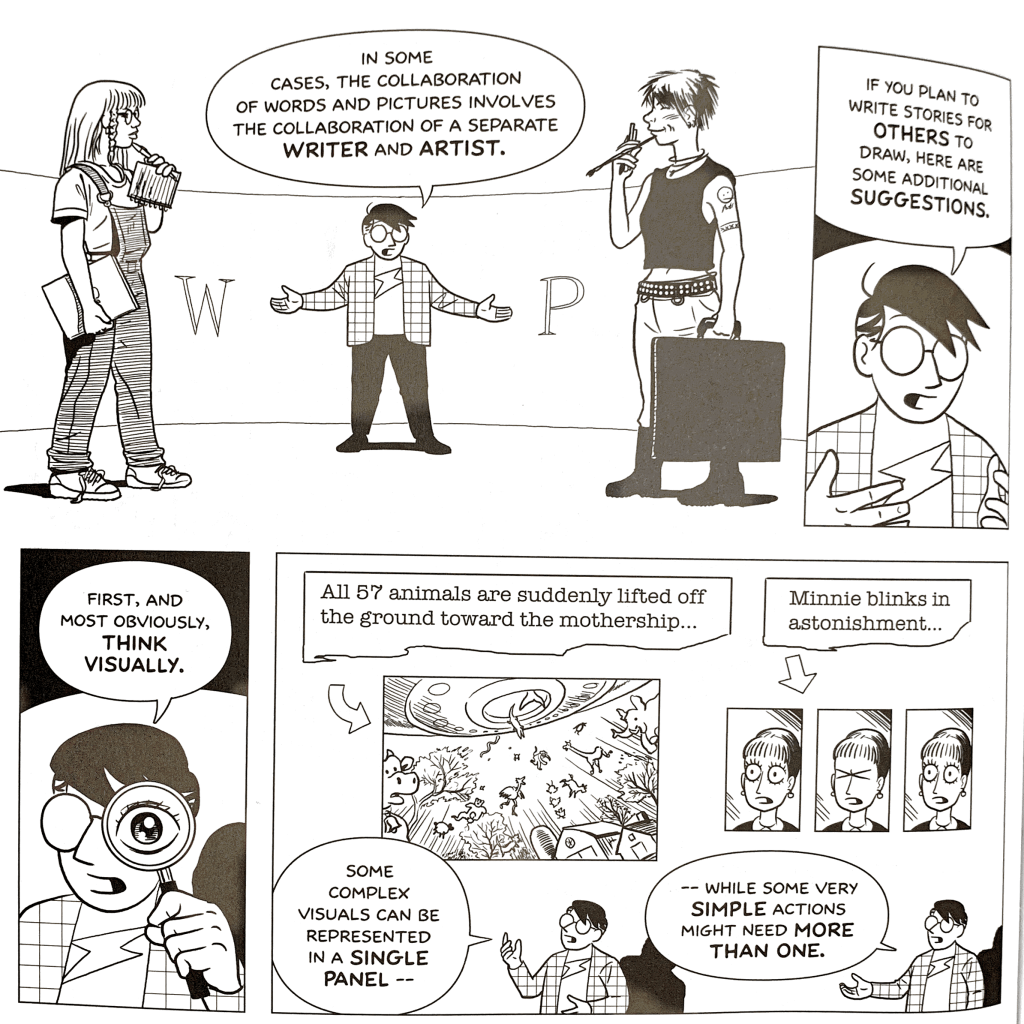
Most how-to-cartoon books are terrible, so don’t get discouraged by their lousy advice. Remember, if the people who put together how-to-cartoon books knew what they were doing, they probably wouldn’t be doing how-to-cartoon books.
Check out the original artwork of cartoonists you admire. You may be in for a surprise. It doesn’t look as slick as the printed stuff, does it? It’s full of smudges, pencil marks, erased lines, and covered-up mistakes. Most young, would-be cartoonists end up getting totally bummed out because their stuff doesn’t look as slick and perfect as the stuff they see in print. But the original work by the pros themselves usually don’t look that good, either. So it’s okay for your original artwork to look a little smudgy, too.
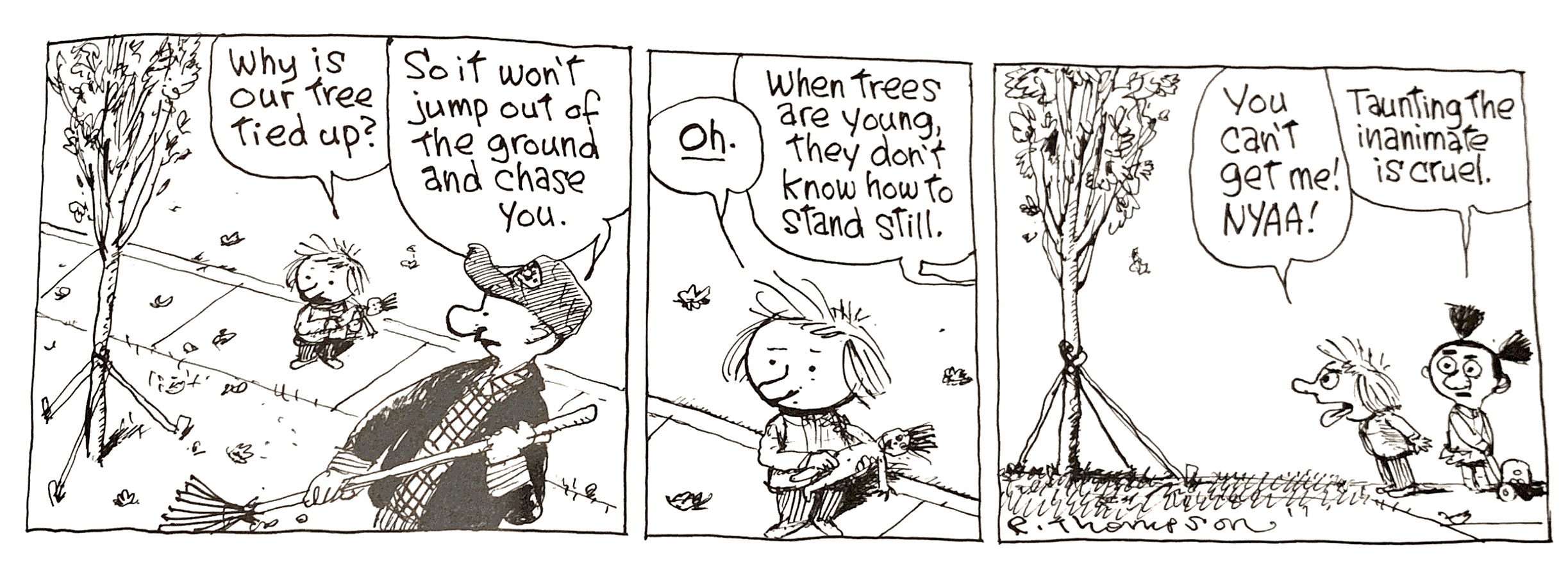
It’s not horrible to be a crummy drawer. There’s room for all sorts of styles in the world. All I can draw are people with big eyeballs and no chins, and I can’t even do that well-but look at me. I get to blab about how to cartoon, and you get to listen to me.
And finally: Be original. It’s okay to copy the cartoons you love, if you must. But please: Eventually edge toward your own ideas and stories. That way I won’t have to track you down and sue you.
The way to learn to draw is by drawing. People who make art must not merely know about it. For an artist, the important thing is not how much he knows, but how much he can do. A scientist may know all about aeronautics without being able to handle an airplane. It is only by flying that he can develop the senses for flying. If I were asked what one thing more than any other would teach a student how to draw, I should answer, ‘Drawing – incessantly, furiously, painstakingly drawing.’
The Natural Way to Draw, Nicolaïdes, Kimon
An artist must have skin in the game.
The work, the practice of drawing everyday, is the path to improvement.




 Floodlights and Goalposts