Mindless drawings fill
pages with rockets, monsters,
and bug eyed portraits.
An online commonplace book
Mindless drawings fill
pages with rockets, monsters,
and bug eyed portraits.
https://m.youtube.com/watch?v=iUSt6YCXMV0
You couldn’t look at Jason’s drawings and not be compelled to draw.
Two heartfelt tributes to an inspirational artist:
Draw whatever you want, by Austin Kleon
No One Looked at New York Like Jason Polan, by Jerry Saltz
Another Christmas window story. Almost every morning, I eat breakfast in the same diner, and this morning a man was painting the windows with Christmas designs. Snowmen. Snowflakes. Bells. Santa Claus. He stood outside on the sidewalk, painting in the freezing cold, his breath steaming, alternating brushes and rollers with different colors of paint. Inside the diner, the customers and servers watched as he layered red and white and blue paint on the outside of the big windows. Behind him the rain changed to snow, falling sideways in the wind.
The painter’s hair was all different colors of gray, and his face was slack and wrinkled as the empty ass of his jeans. Between colors, he’d stop to drink something out of a paper cup.
Watching him from inside, eating eggs and toast, somebody said it was sad. This customer said the man was probably a failed artist. It was probably whiskey in the cup. He probably had a studio full of failed paintings and now made his living decorating cheesy restaurant and grocery store windows. Just sad, sad, sad.
This painter guy kept putting up the colors. All the white “snow,” first. Then some fields of red and green. Then some black outlines that made the color shapes into Xmas stockings and trees.
A server walked around, pouring coffee for people, and said, “That’s so neat. I wish I could do that…”
And whether we envied or pitied this guy in the cold, he kept painting. Adding details and layers of color. And I’m not sure when it happened, but at some moment he wasn’t there. The pictures themselves were so rich, they filled the windows so well, the colors so bright, that the painter had left. Whether he was a failure or a hero. He’d disappeared, gone off to wherever, and all we were seeing was his work.
For homework, ask your family and friends what you were like as a child. Better yet, ask them what they were like as children. Then, just listen.
Merry Christmas, and thank you for reading my work.
Chuck Palahniuk
From the essay: Stocking Stuffers: 13 Writing Tips From Chuck Palahniuk

I pass this tag everyday. I’m surprised it hasn’t been wiped away yet.
It looks like a motorbike from the future jumping off the past.
There’s no seat. You magnetically hover above the frame.
There’s no handlebars. You steer by telepathy.
Crazy thought?
Yes.
But this is where we’re headed.



Welcome to Twisted Trompo.
The food is bite after bite scrumptious. But visually, the Twisted Trompo is fun to look at too.
The paisley patterned tiles give the bar a flourish.
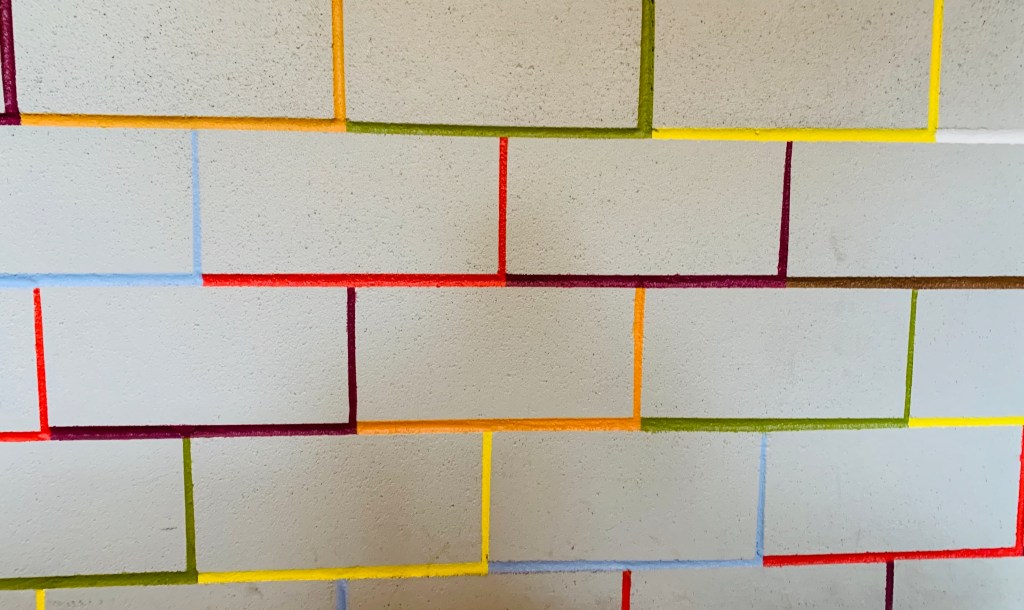
The painted cement between the cinder blocks light the walls. How did they get the color to come out so vivid?
And the mural above the bar had me staring and searching for new techniques.
Unfortunately, I didn’t get the artist’s name. But shoutout, whoever you are.
I dig the thick, strong lines around each subject. It’s part comic book panel, part fine painting. Question though – What’s the top’s significance?
Twisted Trompo is a reminder that what surrounds you while you eat – friends, strangers, staff and art, is as important as the food.
Menu recommendation: If you’re a carnivore, order the Torta Cubana. It’s a meat theme park you’ll never forget.
The way to learn to draw is by drawing. People who make art must not merely know about it. For an artist, the important thing is not how much he knows, but how much he can do. A scientist may know all about aeronautics without being able to handle an airplane. It is only by flying that he can develop the senses for flying. If I were asked what one thing more than any other would teach a student how to draw, I should answer, ‘Drawing – incessantly, furiously, painstakingly drawing.’
The Natural Way to Draw, Nicolaïdes, Kimon
An artist must have skin in the game.
The work, the practice of drawing everyday, is the path to improvement.


They stare at you like haunted paintings.
Faces that are easy to miss among the parents having breakdowns. The kids having breakdowns. The sweet Mickey Mouse eared treats, and brain twisting teacups.
But there they are, waiting to be noticed. Beautiful sculptures that set the atmosphere inside the Magic Kingdom.
I had to document the mystical eyes.
I needed to photograph the creepy skulls.
I wanted to remember the joyful smiles.


I wanted to snap a compelling picture. Bring an old football boot to life.
This picture had hope, so I showed my boo. She gave it the iphone thumbs up, but her text message that followed made me pause.
“It looks like a heart.” she said.
Suddenly, I was no longer looking at a football boot.
Instead of studs, I saw aortas. Instead of stitching I saw capillaries. Instead of fake leather I saw flesh and muscle.
This is the power of sharing your work. The person you share it with, can let you see through their eyes.
Some mornings, in a perfect world, you might wake up, have a coffee, finish meditation, and say, “Okay, today I’m going into the shop to work on a lamp.” This idea comes to you, you can see it, but to accomplish it you need what I call a “setup.” For example, you may need a working shop or a working painting studio. You may need a working music studio. Or a computer room where you can write something. It’s crucial to have a setup, so that, at any given moment, when you get an idea, you have the place and tools to make it happen.
If you don’t have a setup, there are many times when you get the inspiration, the idea, but you have no tools, no place to put it together. And the idea just sits there and festers. Over time, it will go away. You didn’t fulfill it-and that’s just a heartache.
David Lynch, Catching the Big Fish, pg 125
It’s easy to read this David Lynch quote and be discouraged.
A computer room? I’m not a CEO.
Music studio? Ha!
Workshop? I don’t even have a garage.
But be encouraged and remember:
Your setup could be a composition notebook you carry. Or the Pages app on your iPhone.
Maybe it’s the back corner desk, near the history section at the library. It could be the kitchen table after the apple juice and rice is wiped off.
If you do have a workshop, studio, or office, than make use of those places. But if you don’t, use what tools and space you do have.
Then go, go bring your ideas to bear.

Hand painted signs needn’t always be majestic, 8-bit thunderbirds.
They can be six, bold, black letters adorning a concrete wall.
As the art critic Jerry Saltz says:
But for almost its entire history, art has been a verb, something that does things to or for you, that makes things happen.
How to be an Artist 33 Rules to take you from clueless amateur to generational talent (or at least help you live life a little more creatively). Vulture Guides, Nov. 27, 2018, Jerry Saltz
Art can simply exist to do something for you. Like reminding you you’re outside the office.
 Floodlights and Goalposts